
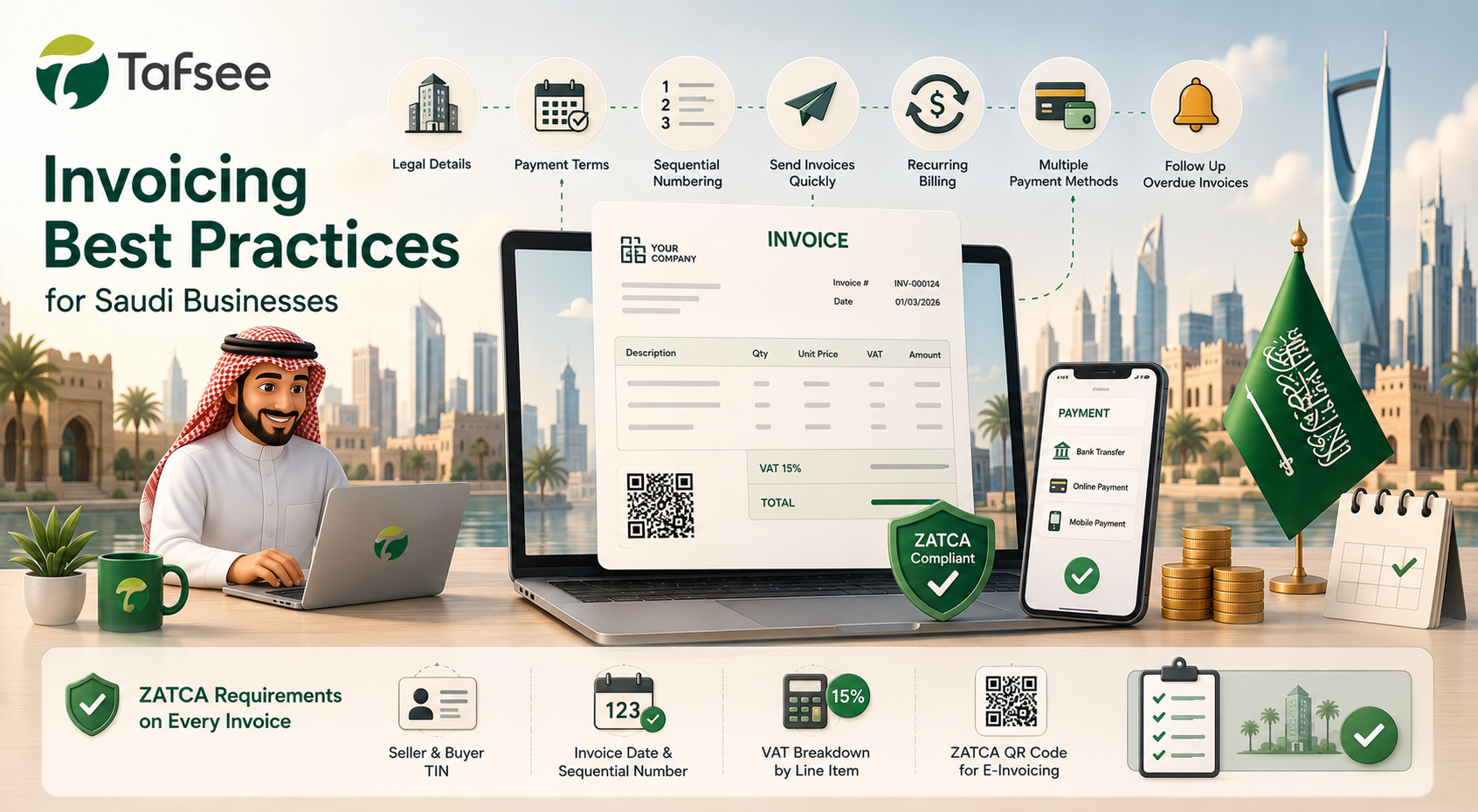
Professional invoicing is about more than just requesting payment. A well-structured invoice builds trust, reduces disputes, and accelerates your cash flow. For Saudi businesses, it also means following ZATCA e-invoicing standards.
Invoicing Best Practices Checklist
- Include legal business detailsAdd your company logo, full legal name, commercial registration number, and VAT number on every invoice.
- Set clear payment termsSpecify due on receipt, net 15, or net 30 to avoid delayed payments and follow-up friction.
- Use sequential numberingZATCA requires sequential invoice numbers with no gaps. Tafsee Books handles this automatically.
- Send invoices quicklyInvoices sent within 24 hours of delivery are typically paid much faster than delayed invoices.
- Automate recurring billingUse recurring schedules for subscriptions and retainers so invoices go out on time.
- Offer multiple payment methodsBank transfer, online payment links, and mobile payment options improve collection speed.
- Follow up on overdue invoicesConfigure automatic reminders to keep accounts receivable healthy.
ZATCA Requirements to Include on Every Invoice
- Seller and buyer TIN where applicable
- Invoice date and unique sequential number
- VAT breakdown by line item
- ZATCA-compliant QR code for e-invoicing workflows
For a full compliance workflow, review our ZATCA Compliance Checklist for Saudi Businesses.